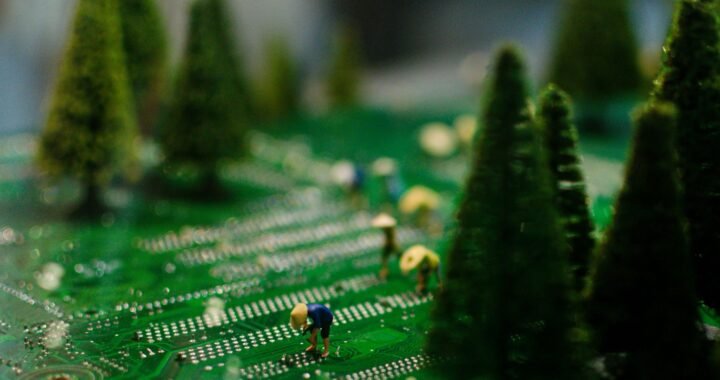
The Tiny Tech That’s Changing How We See the World

Have you ever looked at something really, really small? Like, super small? Science and tech are getting so good at making things tiny. We’re talking about things so small you can’t even see them without a special microscope. These tiny technologies are starting to pop up everywhere, and they’re changing everything from how we fix our bodies to how we build our gadgets.
One of the coolest areas where this is happening is with nanoparticles. These are particles that measure between 1 and 100 nanometers. To give you an idea, a human hair is about 80,000 to 100,000 nanometers wide. So, yeah, we’re talking seriously small stuff here.
What Can We Do With Nanoparticles?
Can You Pass This Microscopic Tech Challenge?
Test your knowledge of nanoparticles, smart dust, and microscopic tech with this quick, engaging quiz based on the article.
See your result instantly after answering.
Scientists are finding amazing ways to use these tiny particles. One big area is medicine. Imagine tiny robots, made of nanoparticles, that can go inside your body. They could find disease cells, like cancer, and attack them directly. This means less harm to your healthy cells compared to traditional treatments.
Doctors are already using nanoparticles in some treatments. For example, some cancer drugs use nanoparticles to deliver the medicine right where it’s needed. This can make the drugs work better and cause fewer side effects. It’s like giving your medicine a tiny, smart delivery truck.
Beyond medicine, nanoparticles are also making our materials stronger and lighter. Think about sports equipment or even airplane parts. Adding a small amount of specific nanoparticles can make materials much tougher. This means things can be made thinner and lighter without losing strength. It’s a win-win for durability and efficiency.
The Future of Tiny Computers
We’re also seeing incredible progress in making computer chips smaller and more powerful. For years, the trend has been to shrink transistors, the basic building blocks of computer chips. This is often called Moore’s Law, and while it’s slowing down, the drive to make things smaller continues.
In 2026, companies are pushing the limits of what’s possible with chip manufacturing. We’re seeing chips being made with processes like 2-nanometer technology. This means the tiny transistors on the chip are only 2 nanometers in size. This allows for more processing power in a smaller space. Your smartphone or laptop will get even faster and more efficient.
This miniaturization isn’t just about speed. It’s also about making devices that use less power. Smaller components need less energy to run. This is super important for battery-powered devices like smartwatches, wireless earbuds, and the growing number of Internet of Things (IoT) devices that are starting to connect everything around us.
Smart Dust: A Sci-Fi Concept Becoming Real?
One of the more futuristic ideas is “smart dust.” This concept involves tiny, microscopic sensors, perhaps the size of a grain of sand or even smaller. These sensors could be scattered around to monitor things like temperature, light, or even chemical presence.
Imagine tiny sensors spread across a farm, reporting on soil moisture levels for each plant. Or sensors in a city monitoring air quality in real time. These “motes,” as they are sometimes called, would communicate wirelessly with each other and a central hub. The challenge has always been making them small enough, powerful enough, and able to communicate effectively without needing much energy.
While full-blown “smart dust” might still be a few years away from widespread use, the building blocks are being developed rapidly. Researchers are working on ways to power these tiny devices, often using vibrations or light. They are also developing ways for these tiny sensors to talk to each other using very low power radio signals. This could lead to a new era of hyper-local, detailed environmental monitoring.
Protecting Ourselves with Tiny Tech
Beyond medicine and computing, tiny tech is also entering the world of personal safety and health monitoring. Wearable devices are getting smaller and more sophisticated. We’re not just talking about fitness trackers anymore.
Think about tiny sensors that can monitor your vital signs throughout the day. They could detect early signs of heart problems or stress. Some of these sensors are so small they can be integrated into clothing or even worn as patches on your skin. They collect data that can be sent to your doctor or a health app on your phone.
There are also advancements in tiny sensors for environmental monitoring that affect our health. For instance, portable devices are being developed that can detect harmful pollutants in the air or water. This gives people the power to know if their environment is safe, wherever they go. This kind of personal sensing technology is becoming more accessible every year.
The Challenges Ahead
Of course, making things this small comes with its own set of challenges. For nanoparticles, ensuring they are safe for the human body and the environment is crucial. Scientists are studying how these tiny particles behave and if there are any long-term risks.
For tiny electronics, the challenge is manufacturing them reliably and affordably. Making billions of incredibly small components for chips requires extremely precise factories and processes. It’s a complex dance of physics and engineering.
And for ideas like smart dust, the main hurdles are power and communication. How do you power a device smaller than a speck of dust for years? How do you make sure all these tiny devices can send their information without interfering with each other?
The Big Picture
Even with these challenges, the progress in tiny technology is undeniable. In 2026, we are seeing more and more applications of nanotechnology and miniaturization appearing in our daily lives. From life-saving medical treatments to faster computers and smarter homes, the smallest innovations are having the biggest impact.
It’s exciting to think about what’s next. As scientists and engineers continue to shrink technology, we can expect even more surprising and beneficial inventions. The future really is small, and it’s already here.