Beyond the Dial: The Hidden Stories of Watch Crowns and Pushers

We all look at the watch face, right? That’s where the time is. But have you ever really stopped to think about the other bits? The little knobs and buttons on the side of your watch. They have their own stories. They are super important for how a watch works. And sometimes, they tell us a lot about the watch’s history or purpose.
Key Takeaways
- Watch crowns and pushers are more than just functional parts; they are design elements with historical significance.
- The design of a crown (e.g., onion, fluted, screw-down) can indicate a watch’s era and intended use.
- Pushers, especially on chronographs, have evolved in design and function, often defining the watch’s complexity and style.
- The materials and finishing of crowns and pushers contribute to a watch’s overall luxury feel and value.
- Understanding these components can help identify a watch’s authenticity and historical context.
The Humble Crown: More Than Just Winding
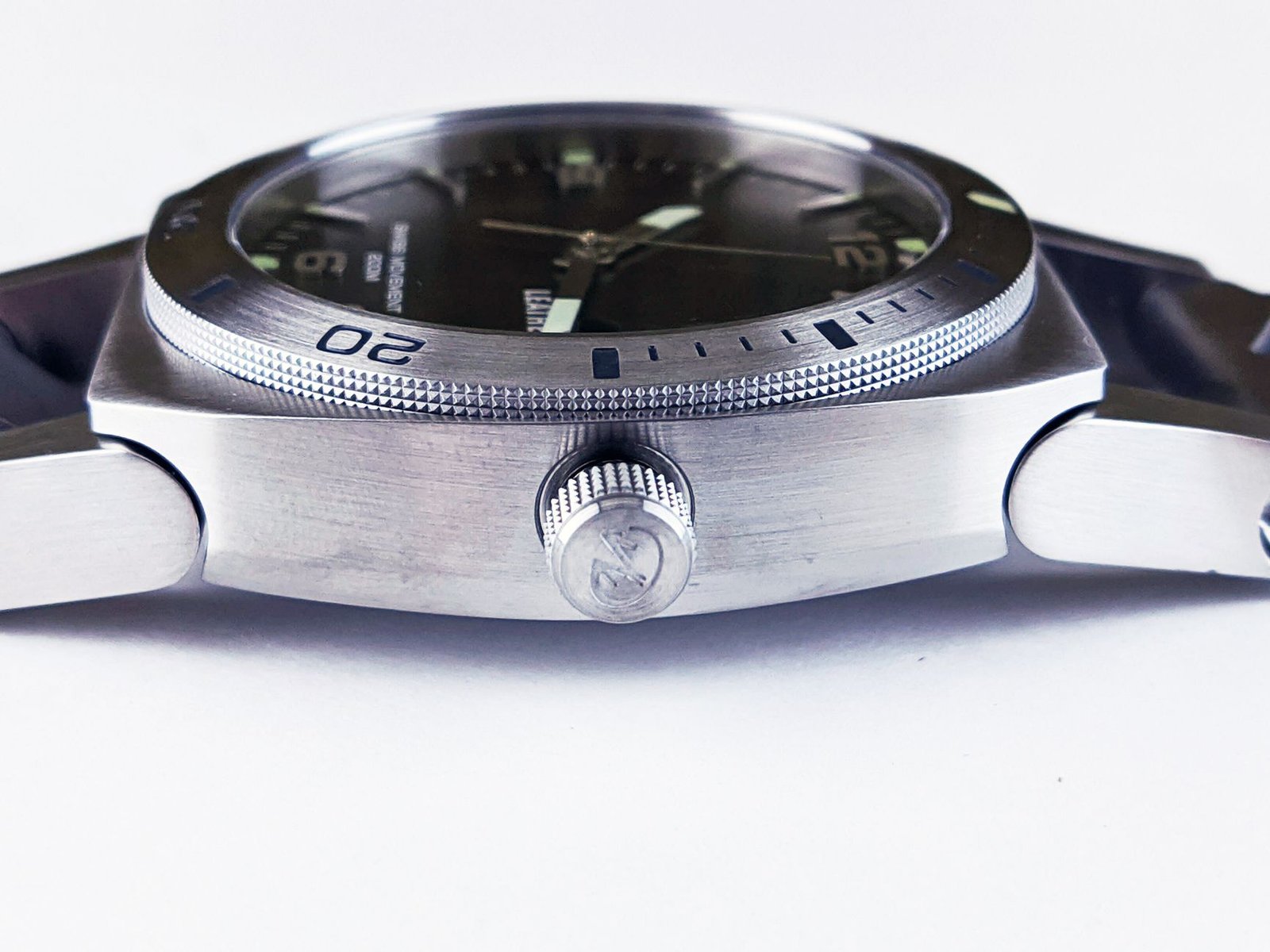
Let’s start with the crown. That’s the little wheel you use to set the time and wind the watch. You probably use it every day without thinking much about it. But its design has changed a lot over the years. Early watches often had small, smooth crowns. They could be tricky to grip. Then came the fluted crowns. You know, the ones with the little ridges. These were easier to turn, even with cold fingers. This was a big deal back when many people worked outdoors or in manual labor jobs.
Then there are the “onion” crowns. These are bigger and rounder, looking a bit like an onion. They were popular in the early 20th century, especially on pocket watches that were converted into wristwatches. They have a very distinct vintage look. For sports watches, especially dive watches, a different type of crown became standard: the screw-down crown.
A screw-down crown works like a screw. You unscrew it to set the time or wind the watch. Then you screw it back down tightly. This creates a much better seal against water. Brands like Rolex made this a key feature in their Oyster case watches, starting in the 1920s. This innovation was crucial for making waterproof watches a reality. The ability to screw down the crown is a big part of what makes a dive watch, well, a dive watch. It’s a key indicator of its water resistance capabilities. Brands often advertise their hermetic sealing, and the screw-down crown is central to that. The size and shape of the crown also tell a story. A large, easy-to-grip crown might suggest a tool watch, designed for use in tough conditions. A smaller, more elegant crown could point to a dress watch, meant for more formal occasions.
Pushers: The Buttons of Complication
Now, let’s talk about pushers. These are the buttons usually found on the side of the watch case, often alongside the crown. They are most commonly associated with chronograph watches. Chronographs are watches that can measure elapsed time, like a stopwatch. The pushers are used to start, stop, and reset the chronograph function.
The design of these pushers has also evolved. Early chronographs might have had just one pusher. This single pusher would control all functions: start, stop, and reset. This is known as a single-pusher chronograph. These are quite rare and collectible today. They are often found on very old watches, from the early 1900s up to the 1930s or 1940s.
As watchmaking advanced, two-pusher chronographs became the standard. Typically, the top pusher starts and stops the chronograph. The bottom pusher resets the hands. This is the layout you see on most modern chronographs. Think of iconic models like the Omega Speedmaster or the Breitling Navitimer. Their two pushers are instantly recognizable.
There are also chronographs with three pushers. Sometimes, a third pusher is used for a different function, like a flyback or rattrapante (split-seconds) complication. A flyback pusher allows the chronograph to be reset to zero and restarted instantly with a single press. This is useful for timing sequential events, like in aviation or racing. A rattrapante complication involves having two central second hands. One pusher controls both, while another controls the split-seconds hand, allowing you to time different intervals within the same event. These are incredibly complex and rare, making watches with them highly sought after.
Materials and Finishing: Adding to the Luxury
The materials used for crowns and pushers are just as important as their design. For most watches, they are made from the same material as the watch case. So, a stainless steel watch will likely have steel crown and pushers. A gold watch will have gold ones. A titanium watch will have titanium. This consistency adds to the overall aesthetic appeal and perceived quality.
However, some brands use contrasting materials for a visual pop. You might see a ceramic crown on a steel watch, or a red gold crown on a platinum watch. These details can significantly increase the cost and exclusivity of a timepiece. The finishing is also critical. A well-made crown or pusher will have crisp lines and a smooth feel. They might be polished, brushed, or have a combination of finishes. High-end watches often feature intricately engraved logos on their crowns, like the Rolex crown or the Omega symbol.
The tactile experience of using the crown and pushers is a key part of the luxury feel. They should operate with a satisfying click or a smooth, precise action. Stiff, gritty, or loose-feeling controls are usually a sign of a lower-quality watch, or a watch in need of service. The satisfying ‘snap’ of a well-made chronograph pusher is something enthusiasts truly appreciate. It’s a small detail, but it speaks volumes about the watch’s engineering and craftsmanship.
Iconic Designs and Their Stories
Certain crown and pusher designs have become legendary, tied to specific iconic watches. Take the Rolex Twinlock and Triplock crowns. These are screw-down crowns that are a signature feature of Rolex sports watches. They are designed for excellent water resistance, with double or triple seals. The Rolex crown logo is usually engraved on the side of the crown, adding a touch of branding. The feel of screwing down a Rolex crown is often described as very secure and precise.
Another famous example is the integrated chronograph design. Here, the pushers and crown are designed as a cohesive unit. Early examples from brands like Longines or Universal Genève often had beautifully shaped pushers. They might be round, square, or even rectangular. These designs are highly collectible. The aesthetic integration of the pushers with the case shape is a key part of their vintage charm.
Consider the “Big Crown” found on some vintage military watches, like the Rolex Air King or the Panerai watches issued to the Italian Navy. These were large crowns designed to be easily operated while wearing gloves. They are a clear indicator of the watch’s tool-watch heritage. The size and shape directly relate to its intended purpose.
The pushers on the Omega Speedmaster Professional “Moonwatch” are also noteworthy. They are distinctive in their shape and how they integrate with the case. Early Speedmasters had round pushers. Later models, particularly from the 1960s and 70s, often featured more angular, rectangular pushers that became iconic. The functionality of these pushers was crucial for the astronauts during the Gemini and Apollo missions. They needed to be reliable and easy to use in zero gravity. Buzz Aldrin himself famously used his Speedmaster’s pushers to time critical parts of the lunar module’s descent.
Buying and Authentication: What to Look For
When you’re looking to buy a vintage watch, the crown and pushers can tell you a lot. First, check if they look correct for the model and era. Are they the right shape and size? For a vintage watch, original parts are always preferred by collectors. A replacement crown or pusher might not be made of the same material or have the same finishing. It might also lack the correct branding or engraving.
For screw-down crowns, check how they screw down. Does it thread easily? Does it feel secure when fully screwed in? A damaged thread can be a sign of rough handling or a difficult repair. For chronographs, test the pushers. Do they activate the functions smoothly? Do they feel crisp and responsive? A jammed or mushy pusher could mean internal damage or a need for a service. Sometimes, aftermarket pushers might be used to replace damaged original ones. These might have a slightly different texture or shape.
Look closely at the engravings on the crown. Are they sharp and clear, or worn down and indistinct? Worn engravings can indicate heavy use, but on a fake, they might be poorly executed or too shallow. The logo on the crown is a key authentication point. Compare it to known examples of genuine watches. Small details in the logo’s design can be revealing.
Also, consider the context. If a watch is described as “mint condition” but the crown is heavily scratched and the pushers feel loose, something might be off. Conversely, some wear on these functional parts is normal for vintage watches and can even add to their character. It shows the watch has been used and enjoyed.
Maintenance and Care
Proper care for your watch’s crown and pushers is essential for its longevity and functionality. If you have a screw-down crown, remember to screw it back in after setting the time. This is crucial for maintaining water resistance. If you notice resistance when screwing it down, don’t force it. It might be cross-threaded or there might be debris in the threads. Try unscrewing it and trying again gently. If the problem persists, it’s best to have it checked by a watchmaker.
For chronograph pushers, avoid pressing them repeatedly or forcefully, especially if the watch is not designed for heavy use. If your watch is a chronograph, ensure it is up to date on its servicing. The internal mechanisms that control the pushers can wear out over time. Regular servicing, typically every 3 to 5 years, will keep these parts functioning correctly and prevent damage.
When cleaning your watch, be careful around the crown and pushers. Use a soft, slightly damp cloth to wipe them. Avoid getting water or cleaning solutions into the watch case through these openings, especially if your watch is not water-resistant. For watches with high water resistance, professional cleaning might be recommended periodically.
Frequently Asked Questions
What is the most common type of watch crown?
The most common type of watch crown is the fluted crown, which has ridges for better grip. For water-resistant watches, the screw-down crown is also very common and essential for maintaining seals.
Are single-pusher chronographs valuable?
Yes, single-pusher chronographs are generally very valuable and highly sought after by collectors. They represent an earlier, more complex form of chronograph design and are much rarer than modern two-pusher models.
Can a scratched crown affect a watch’s water resistance?
A scratched crown itself might not directly affect water resistance unless the scratches are very deep and compromise the seal. However, if the crown’s threads are damaged from repeated forceful use or cross-threading, it can significantly impair water resistance, especially with screw-down crowns.
How often should chronograph pushers be serviced?
Chronograph pushers are part of the watch’s movement and should be serviced along with the rest of the watch. A general recommendation is every 3 to 5 years for a full service to ensure all components, including the chronograph mechanism, are functioning optimally and to prevent wear.
What does a ‘Big Crown’ on a watch signify?
A ‘Big Crown’ on a watch, typically larger and more prominent than standard crowns, usually signifies a watch designed for a specific purpose where ease of use is paramount. This often includes military watches or early pilot and diver watches, where the crown needed to be operable with gloves or by touch.
Is it okay to wind my watch if it has a screw-down crown?
Yes, you can wind a watch with a screw-down crown. You must first unscrew the crown to the winding position (usually the furthest out position, or one click out from fully screwed in) before winding. After winding, remember to screw the crown back down tightly to ensure water resistance.
The Subtle Details That Tell a Big Story
So, the next time you look at a watch, pay a little more attention to the crown and pushers. These often-overlooked components are more than just functional parts. They are design statements, historical markers, and crucial indicators of a watch’s purpose and quality. They are a key part of the mechanical art that makes watch collecting so fascinating. Take a moment to appreciate the craftsmanship in these small but mighty details.