How 1950s Atomic Bomb Tests Accidentally Ruined a $500,000 Wine Scam

If you stumbled across a dusty, 200-year-old bottle of French Bordeaux in a European basement—supposedly owned by Thomas Jefferson himself—you might think you’ve struck gold. In the world of high-end wine collecting, single bottles from the 18th and 19th centuries routinely fetch anywhere from $50,000 to over $500,000 at elite auction houses.
There’s just one massive problem: how do you prove the liquid inside a sealed, 200-year-old glass bottle isn’t just cheap modern grocery store wine poured in last Tuesday?
For decades, master counterfeiters made millions selling fake vintage wines and forged classical oil paintings. They used aged paper labels, weathered corks, and antique glass to fool even the sharpest historians.
Can You Spot the Atomic Wine Forgeries?
Test your understanding of how Cold War nuclear fallout accidentally revolutionized the science of detecting high-stakes wine and art counterfeits.
See your result instantly after answering.
Then, scientists realized something mind-bending: the Cold War nuclear arms race accidentally left an invisible fingerprint on every single living thing on Earth.
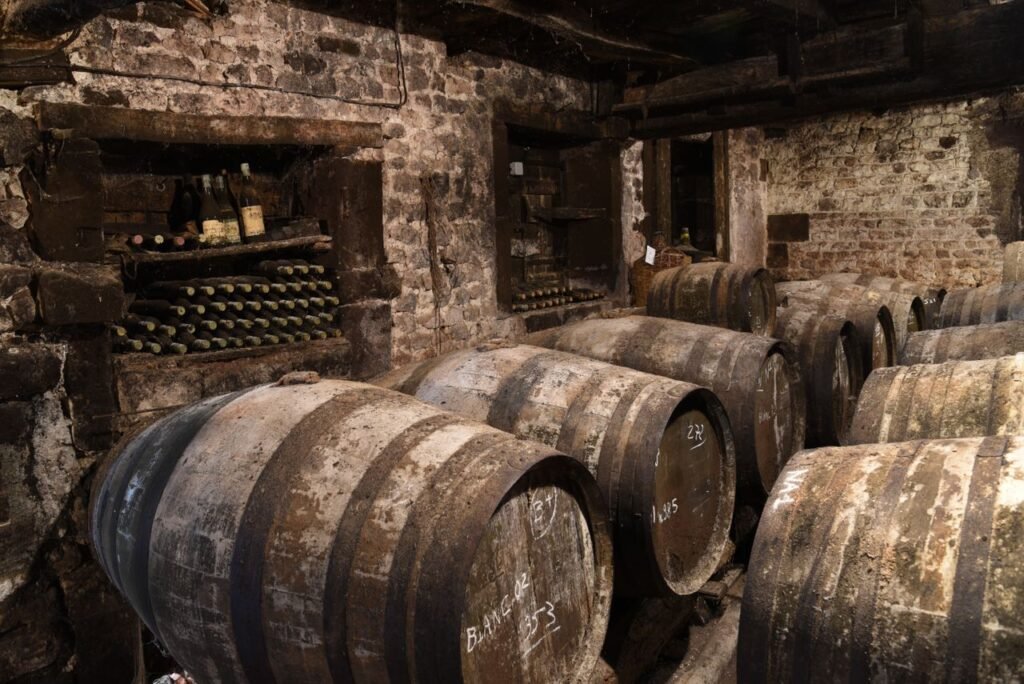
Thanks to thousands of atmospheric nuclear bomb tests conducted after 1945, elite detectives can now expose million-dollar fakes without ever pulling the cork.
The Birth of the “Nuclear Age” Fingerprint
On July 16, 1945, the United States detonated the world’s first atomic bomb at the Trinity test site in New Mexico. Over the next two decades, global superpowers conducted more than 2,000 nuclear detonations in the atmosphere, ocean, and desert testing grounds.
While those weapons reshaped geopolitics, they also released synthetic, man-made radioactive isotopes that had never existed in nature prior to the 1940s.
Chief among these rogue isotopes was Cesium-137 ($\text{Cs-137}$).
 1945: First Atomic Detonation (Trinity)
    │
    ▼
 Atmospheric Dusting of Cesium-137
    │
    ├────────► Absorbed by Soil & Grapevines  ──► Enters Post-1945 Wine
    │
    └────────► Absorbed by Flax Plants (Linseed) ──► Enters Post-1945 Paints
When nuclear explosions sent Cesium-137 floating into the stratosphere, global wind currents spread the isotope across the entire planet. It rained down onto agricultural fields, settled in soils, and was absorbed by plants:
- Grapevines absorbed Cesium-137 from the soil and rain, transferring tiny, safe trace amounts into the grapes and eventually into the bottled wine.
- Flax plants absorbed it, contaminating the linseed oil used by master artists as a binding agent in oil paints.
The Science: Pre-1945 vs. Post-1945
Because Cesium-137 does not exist naturally in the earth’s crust, its presence acts as a binary timeline switch:
- Bottled BEFORE 1945: Contains 0% Cesium-137.
- Bottled AFTER 1945: Contains detectable traces of Cesium-137.

French nuclear physicist Philippe Hubert of the University of Bordeaux realized this scientific anomaly could be weaponized against high-stakes art and wine fraud.
Using ultra-sensitive gamma-ray detectors, Hubert discovered he could shoot low-frequency gamma rays directly through the glass of an unopened wine bottle. If the detector picked up even a microscopic spike of Cesium-137, it was absolute proof that the grape liquid inside grew in soil after the advent of nuclear testing.
If a bottle claimed to be a rare 1787 vintage owned by Thomas Jefferson showed traces of nuclear fallout, the verdict was instant: BUSTED.
Detection Capabilities Across Decades
| Object / Material | Claimed Era | Detector Test Result | The Verdict |
| “1787” Château Lafite | Pre-Industrial / French Revolution | Positive for Cesium-137 | Fake: Liquid inside was made using post-1945 grapes. |
| 1920s Russian Avant-Garde Painting | Early 20th Century | Positive for Strontium-90 & Cs-137 | Fake: Canvas painted with modern post-war linseed oils. |
| Authentic 1900 Chateau Margaux | Turn-of-the-Century Europe | Zero Cesium-137 detected | Plausible: Matches genuine pre-atomic era grapes. |
The Billionaire’s Vinegar: The Case That Shook the Fine Wine World
During the late 1980s, a mysterious German music manager and wine collector named Hardy Rodenstock announced a historic discovery. He claimed to have found a hidden cache of 18th-century wines in a Paris basement, engraved with the initials “Th. J”—allegedly belonging to U.S. Founding Father Thomas Jefferson.
American billionaire collector Bill Koch purchased four of these Jefferson bottles for hundreds of thousands of dollars.
When rumors of counterfeiting began circulating in the early 2000s, Koch hired a team of ex-FBI agents, historians, and physicists to investigate.
                     [ THE "JEFFERSON BOTTLE" INVESTIGATION ]
                                       │
     ┌─────────────────────────────────┴─────────────────────────────────┐
     ▼                                                                   ▼
[ Gamma-Ray Spectrometry ]                                    [ Dental Drill Forensics ]
Detects nuclear isotopes                                      Magnification reveals bottle
to verify pre-1945 wine liquid.                               initials were carved with modern
                                                              power tools, not 18th-century chisels.
When scientists brought in gamma-ray detectors, several suspect vintage bottles floating around auction circuits were found loaded with post-1945 atomic fallout.
Combined with dental-tool forensics proving the “Th. J” engravings on Koch’s bottles were carved using modern electric drills, the entire multi-million dollar illusion crashed to the ground.
Why Scientists Need 2,000-Year-Old Roman Lead
There is one hilarious twist to this high-tech nuclear detective story.
Because atmospheric nuclear tests dusted the entire planet in radiation, modern metals forged after 1945—including modern lead, steel, and aluminum—contain tiny ambient amounts of background radiation.
When testing wine or art for microscopic levels of Cesium-137, normal modern lab shields emit too much background radiation and drown out the test readings.
To build gamma-ray detectors sensitive enough to spot nuclear wine fraud, scientists have to shield their equipment using ancient lead smelted during the Roman Empire or steel salvaged from sunken pre-WWII battleships!
Because Roman lead sat at the bottom of the ocean or buried underground for over 2,000 years, its natural radioisotopes fully decayed long before humans ever split the atom.
In order to prove a $200,000 bottle of wine isn’t a fake, scientists literally shield modern atomic detectors with 2,000-year-old ancient Roman sunken treasure!
Frequently Asked Questions (FAQs)
1. Is post-1945 wine dangerous or radioactive to drink?
No, absolutely not. The amount of Cesium-137 absorbed by grapevines from nuclear fallout is microscopic—thousands of times lower than the natural background radiation found in an ordinary banana or human body. It poses zero health risk to drinkers.
2. Can forgers bypass the Cesium-137 test?
A forger can bypass the test only if they fill a fake bottle with actual pre-1945 wine (for example, taking a cheap genuine 1930s wine and re-labeling it as a rare 1700s vintage). However, doing so limits their ability to use fresh, cheap modern wine.
3. Does nuclear testing affect art authentication too?
Yes! Paintings created after 1945 contain traces of Cesium-137 and Strontium-90 inside organic binders like linseed oil, derived from flax crops. If an oil painting claimed to be an authentic 1915 masterpiece contains these isotopes, it is instantly exposed as a post-war forgery.
4. What is low-background steel?
Low-background steel is steel produced prior to the detonation of the first atomic bombs in 1945. Because modern steel production uses atmospheric air contaminated with radionuclides, sensitive scientific sensors (like Geiger counters and medical devices) must be constructed using steel salvaged from pre-1945 shipwrecks, such as sunken World War I battleships.