The Secret Lives of Vintage Watch Dials: More Than Just a Pretty Face

When you first look at a vintage watch, what grabs you? Maybe it’s the overall design, the way it feels on your wrist, or perhaps the brand name itself. But have you ever really stopped to think about the dial? It’s the face of the watch, the part you see constantly. For vintage watches, the dial is often where some of the most interesting stories and value lie. It’s not just about telling time; it’s about history, craftsmanship, and sometimes, a bit of beautiful aging.
In this article, we’re going to focus specifically on watch dials. We’ll look at what makes them special, why some dials are more sought after than others, and what to look out for when you’re admiring or considering buying a vintage piece. Forget complicated movements for a moment; let’s explore the artistry and history captured right on the watch’s face.
Key Takeaways
- Vintage watch dials tell a story of aging, with ‘patina’ adding unique character and value.
- Dial finishes like ‘guilloché’ or ‘sunburst’ require skilled craftsmanship and are highly desirable.
- Color, applied markers versus printed, and dial layout significantly impact a watch’s collectibility.
- Rare dial variations or limited editions often command higher prices among collectors.
- Authenticity checks for dials are crucial, especially for rare or valuable vintage pieces.
What Makes a Vintage Dial Special?
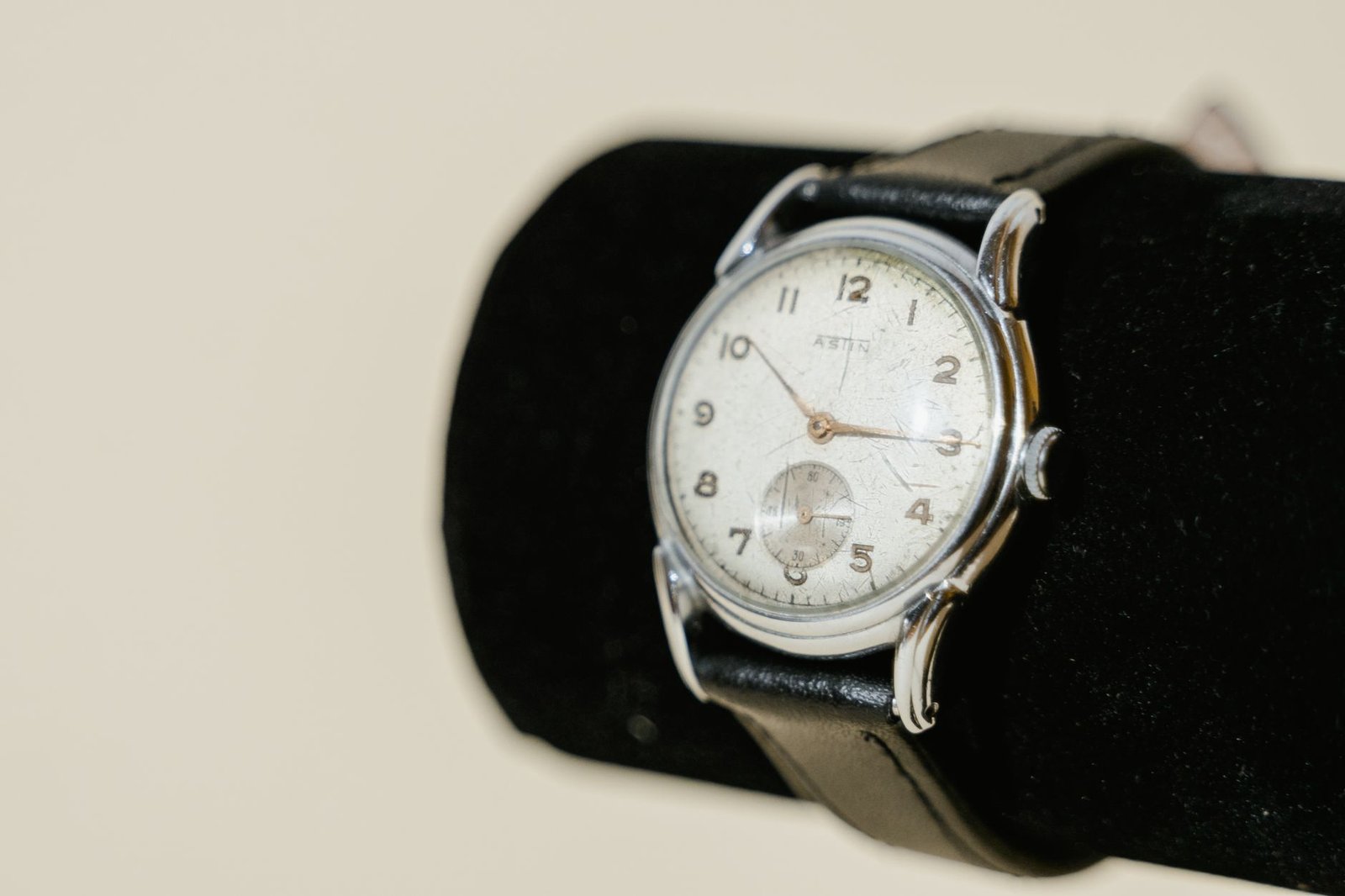
A vintage watch dial is more than just a piece of metal or enamel with numbers and hands. It’s a canvas that has aged over decades. This aging process, often called ‘patina’, is a big part of what makes vintage watches so appealing. Patina can refer to many things. It might be a slight yellowing of the lume (the material that glows in the dark), a subtle fading of the dial color, or even tiny, spiderweb-like cracks in the lacquer. These aren’t flaws; they’re marks of time. They show the watch has lived a life, and each mark is unique to that specific timepiece. A dial with beautiful, even patina is often more desirable than a perfectly preserved but sterile one.
Different types of dials age differently. Enamel dials, for instance, are incredibly durable and can remain pristine for a very long time. However, they are also prone to cracking if the watch is dropped. Lacquer dials, common in the mid-20th century, are more susceptible to developing the desirable ‘spiderweb’ cracks. Even the printing on the dial can change. Sometimes, the ink can fade or develop a slightly raised texture. All these changes contribute to the dial’s personality.
The Art of Dial Finishes
Beyond aging, the original finish of a dial plays a huge role in its appeal. High-end watchmakers often employ complex techniques to create beautiful dial surfaces. One such technique is ‘guilloché’. This involves using a specialized machine to engrave intricate geometric patterns onto the dial. Think of fine lines, waves, or grids that catch the light. Guilloché dials are labor intensive and require immense skill. They are typically found on more luxurious or historically significant watches.
Another popular finish is the ‘sunburst’ or ‘radial’ pattern. Here, fine lines radiate outwards from the center of the dial. This finish is designed to reflect light in a dynamic way, making the dial shimmer and change appearance as you move the watch. A well-executed sunburst can make a simple dial look incredibly elegant. Other finishes include matte, gloss, and textured surfaces. Each offers a different aesthetic and can affect how readable the dial is under various lighting conditions.
Dial Colors and Their Impact
Color is a powerful element in watch dial design. While white, black, and silver are classic choices, vintage watches often feature more adventurous colors. Deep blues, rich greens, warm browns, and even vibrant reds were used. The way a color ages is also important. A black dial might develop a subtle brown or ‘Claret’ hue over time, especially if exposed to sunlight. A blue dial might fade slightly, becoming a softer, more muted shade. These color changes are part of the vintage charm.
Rarity also plays a part. Certain colors were produced in much smaller quantities than others. For example, a vibrant red dial on a watch model that was usually made with a black or silver dial could be exceptionally rare and valuable. Collectors often seek out these less common color variations.
Markers and Hands: More Than Just Pointers
The markers (the hour indicators) and hands on a watch dial are crucial for both function and form. In vintage watches, you’ll see different types. ‘Applied’ markers are individual pieces, often made of metal, that are attached to the dial surface. These can be simple batons, elegant Arabic numerals, or even small diamonds. Applied markers usually indicate a higher quality watch, as they are more complex to produce and assemble.
‘Printed’ markers, on the other hand, are applied directly to the dial surface using ink. While less three-dimensional, finely printed markers can also be very attractive and are common on many iconic watches. The style of the markers, whether they are sharp and angular, rounded, or faceted, also contributes to the overall look and feel of the watch.
The hands, too, come in many shapes: Dauphine, Mercedes, syringe, baton, and more. Their design, material, and how they’ve aged (e.g., if the lume has darkened or flaked) are all part of the dial’s story. Sometimes, hands can be replaced during servicing, and a watch with its original hands is always preferred by collectors.
Rarity, Provenance, and Collectibility
What makes a vintage watch dial truly collectible? Several factors come into play. Rarity is a big one. If a particular model was made with a very limited number of dials in a specific color or configuration, it will be more sought after. Dial variations that were only produced for a short period or for specific markets can also be highly collectible. For instance, a watch made for the American market might have different dial text or markers than one made for the European market.
Provenance adds another layer of value. This refers to the history of ownership. If a watch belonged to a famous person, was involved in a significant event, or has a documented history that adds to its story, its value can increase significantly. Even documented service history from a reputable watchmaker can add to a dial’s desirability, showing it has been cared for.
The brand heritage also plays a crucial role. Brands like Rolex, Patek Philippe, and Omega have long histories and have produced many iconic models with highly recognizable dial designs. Collectors often gravitate towards these established brands because of their reputation, quality, and the historical significance of their timepieces. The specific dial on an iconic model, like a vintage Rolex Daytona or an Omega Speedmaster, can be a deciding factor for a collector.
Dial Variations: The Collector’s Hunt
Within popular watch models, collectors often hunt for specific dial variations. These can be subtle but significant. For example, early production runs of a watch might have a slightly different dial layout or font than later ones. Sometimes, a manufacturer might experiment with different lume materials, resulting in dials with darker or creamier-colored luminous plots. These ‘early’ or ‘transitional’ dials are often prized for their rarity and historical significance.
Limited edition models almost always feature unique dials. These might have special colors, unique branding, or commemorative text. For example, anniversary models or watches produced for a specific event often have dials that were never repeated. These are inherently rare and desirable. Identifying these variations requires a keen eye and often, a lot of research.
Buying and Authenticating Vintage Dials
When you’re looking to buy a vintage watch, the dial is one of the first things you should examine closely. Here are some tips:
Check for originality. Has the dial been refinished? Refinished dials, while sometimes improving appearance, typically decrease a watch’s value significantly for serious collectors. Look for inconsistencies in the printing, uneven application of lume, or a dial that looks “too perfect” for its age. Original dials often show slight imperfections that speak to their authenticity.
Examine the lume. The luminous material on the hands and markers should ideally match in color and condition. If the lume on the dial is a different color or texture than the lume on the hands, it could indicate that one of them has been replaced. Also, check if the lume is still present or if it has flaked off. Some flaking can be acceptable on very old watches, but significant loss can be a concern.
Look for water damage. Moisture can wreak havoc on a dial. Look for any signs of spotting, discoloration, or corrosion, especially around the edges or under the markers. Even if the watch is running, water damage to the dial can be a costly repair and significantly reduce its appeal.
Consider the brand’s history. Research the specific model you’re interested in. Are there known dial variations? What do original examples look like? Online forums and vintage watch communities are great resources for this information. Websites dedicated to specific brands, like those focusing on Patek Philippe complications or early Rolex tool watches, can offer valuable insights.
Authentication is key. For expensive or rare vintage watches, having the dial authenticated by an expert or a reputable dealer is crucial. They can spot inconsistencies, refinishing, or incorrect parts that a novice might miss. This is especially important when buying online or from an unknown seller.
Famous Watches and Their Iconic Dials
Many watches are famous not just for their brand or movement, but for their distinctive dials. The original Omega Speedmaster Professional, for instance, with its matte black dial and white “step” markers, is instantly recognizable. This dial was designed for maximum legibility, a crucial feature for a watch intended for space exploration.
Another example is the Rolex Submariner. Early models featured gilt dials with applied white gold markers, which have a beautiful depth and shimmer. Later versions introduced the matte black dial with white printed markers that became a standard for dive watches. Each iteration, and even variations within those, holds a special place in watch history.
The Patek Philippe Nautilus, designed by Gerald Genta, has a distinctive “waffle” pattern dial that is both textured and visually striking. This unique dial texture is a signature element of the watch, setting it apart from its contemporaries and contributing to its enduring appeal.
The Future of Vintage Dial Collecting
As more people become interested in watches, the appreciation for vintage dials continues to grow. Collectors are increasingly looking for watches with character, and a well-aged, original dial is a prime example of that. The focus is shifting towards authenticity and the story a dial tells. While a pristine, factory-fresh look is always nice, the subtle beauty of a dial that has gracefully aged is becoming more valued.
The market for rare dial variations and limited editions is also strong. As collectors become more knowledgeable, they seek out the unique and the uncommon. This means that understanding the nuances of dial production, color variations, and marker styles is becoming more important than ever for anyone looking to invest in or simply appreciate vintage timepieces.
Frequently Asked Questions
What is ‘patina’ on a watch dial?
Patina refers to the natural aging and changes a watch dial undergoes over time. This can include slight discoloration, fading of color, or aging of the luminous material. It’s often seen as adding character and uniqueness to a vintage watch.
Are refinished dials bad?
For serious collectors, yes. While a refinished dial might look sharp, it alters the watch from its original state and significantly reduces its value and collectibility. Collectors prefer original dials, even with imperfections.
How can I tell if a dial has been refinished?
Look for signs of uneven printing, overly sharp or perfect text, inconsistent lume application, or a dial that looks too new for the watch’s age. Refinished dials often lack the subtle details and character of original ones.
What’s the difference between applied and printed markers?
Applied markers are individual pieces, usually metal, attached to the dial surface, giving a three-dimensional effect. Printed markers are directly applied to the dial using ink, appearing flatter.
Are rare dial colors more valuable?
Often, yes. If a specific color was produced in limited numbers for a particular model, it can be much rarer and more sought after by collectors than standard colors, increasing its value.
Can I safely clean a vintage watch dial?
It is strongly advised NOT to clean a vintage watch dial yourself. Cleaning attempts can easily damage the dial’s finish, printing, or lume. It’s best to leave dial cleaning or restoration to experienced professionals, if it’s even necessary.
When you look at a vintage watch next time, take a moment to really appreciate its dial. It’s a piece of history, a work of art, and a story told on your wrist. Focusing on the dial’s condition and originality can help you find a truly special timepiece.